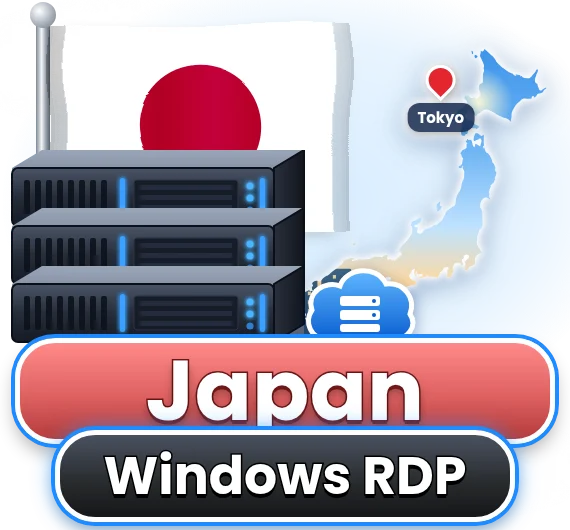
Japan RDP From a Tokyo Data Centre

Japan's internet is fast, but much of it is designed with Japanese residents in mind. Net banking at MUFG, SMBC, Mizuho, Japan Post Bank and Rakuten Bank applies careful checks to overseas logins, and some services refuse them outright. Shopping sites such as Rakuten, Mercari and Yahoo! Auctions, game publishers, ticketing platforms and video services commonly tailor or restrict what they show to visitors outside the country. For the hundreds of thousands of Japanese working abroad, the many foreigners who have lived in Japan and kept accounts there, and international businesses selling to Japanese customers, these restrictions are a daily obstacle. A Windows desktop in Tokyo with a Japanese IP address removes it. The Tokyo machines we rent out sit in a quake-engineered Tier III hall, each one drawing on solid-state disks and a 100 Mbps link into Japanese carrier networks. Every customer gets a dedicated Japanese IPv4 address that has been checked for a clean history, along with one free swap should you need a different IP. Administrator access means you can install Japanese software, IME tools, trading platforms and business applications freely. Six plans cover everything from a single-core desktop for keeping one Japanese session open to a sixteen-core machine with 32 GB of RAM and 6,000 GB of monthly transfer, and payment can be monthly or for up to two years in advance.

Plans from $27.95/mo · Tokyo, Japan
Japanese IPv4
Tokyo Tier III Hall
SSD-Powered Windows
One Free IP Swap

Tokyo RDP Lineup

Six Tokyo plans are available. The single-core plan with 2 GB of memory is an inexpensive way to maintain a Japanese IP for banking or a single web service. The two-core plan with 4 GB is a solid daily desktop for individuals, while four cores with 8 GB give room for business users with Office, browsers and Japanese accounting software open at once. Two eight-core plans with 16 or 32 GB of memory serve traders and small teams, and the top sixteen-core plan with 32 GB supports multi-user offices. All include 50 GB of SSD storage, and monthly transfer grows from 1,000 GB to 6,000 GB.

vCPUMemoryStorageTrafficOSPrice
1 vCPU 2 GB 50 GB NVMe 1000 GB Windows OS $27.95/mo ORDER NOW
2 vCPU 4 GB 50 GB NVMe 2000 GB Windows OS $47.95/mo ORDER NOW
4 vCPU 8 GB 50 GB NVMe 3000 GB Windows OS $74.95/mo ORDER NOW
8 vCPU 16 GB 50 GB NVMe 4000 GB Windows OS $105.95/mo ORDER NOW
8 vCPU 32 GB 50 GB NVMe 5000 GB Windows OS $159.95/mo ORDER NOW
16 vCPU 32 GB 50 GB NVMe 6000 GB Windows OS $219.95/mo ORDER NOW

Prices are listed monthly in US dollars. You may pay up to two years ahead. One IP swap is free; subsequent swaps cost $5.

Tokyo Desktop Specifications

Japanese desktops run on enterprise servers inside a Tier III Tokyo facility engineered with seismic protection and redundant power, so earthquakes and typhoons do not interrupt service. The main specifications are listed below.

LocationTokyo, Japan
FacilityTier III with seismic design
Disk50 GB SSD
Port100 Mbps
Monthly transfer1,000–6,000 GB
IPDedicated Japanese IPv4
PermissionsAdministrator
Payment termsMonthly or up to 2 years prepaid
Japan RDP

Why a Japanese Desktop Pays Off

These advantages explain why customers choose a Tokyo RDP.

Japanese Net Banking From Overseas

MUFG, SMBC and Japan Post sessions start from a domestic IP.

Earthquake-Resilient Facility

Seismic isolation and backup power protect your desktop.

Japan-Only Shops and Services

See Rakuten, Mercari and ticketing sites as local users do.

Low-Latency Access for East Asia

Short routes to Seoul, Taipei and Shanghai.

Inexpensive Starting Plan

A single-core desktop keeps a Japanese IP alive cheaply.

Clean, Replaceable Address

Every IP is screened, and the first swap is free.

Prepay for Two Years

Pay once and avoid renewal hassles while abroad.

Full Software Freedom

Install Japanese IME, trading apps and business tools.

Tokyo Desktop Features

The following features are part of every Japan RDP.

Solid-State Tokyo Storage

Fast SSDs keep Windows and Japanese software responsive.

Hundred-Megabit Japanese Port

A 100 Mbps connection for downloads and file sharing.

Seismic and Power Redundancy

Engineered to keep running through natural disasters.

Pre-Checked IP Reputation

Addresses are screened for spam and abuse history.

Windows Edition Changes

Support can reinstall a different version on request.

Support Through Every Time Zone

Engineers respond to tickets at any hour.

Who Uses a Tokyo Desktop

Japan RDP customers usually belong to one of four groups.

Japanese Professionals Abroad

Employees posted to Singapore, the United States or Europe by Japanese companies, and their families, use the Tokyo desktop for net banking, My Number Portal services and Japanese subscriptions, avoiding blocks on foreign connections and keeping their accounts active.

Former Residents and Students

Foreigners who studied or worked in Japan often keep Japan Post Bank or Yucho accounts and pensions, and a Japanese desktop helps them manage these after returning home.

Overseas Sellers on Japanese Marketplaces

Sellers on Amazon Japan, Rakuten and Mercari manage listings, check competitor prices and respond to customers from a Japanese IP, seeing the marketplace as buyers do.

Traders in the Tokyo Session

Forex and stock traders who operate during Tokyo market hours keep trading terminals running on a desktop close to Japanese brokers and liquidity, with stable connections and 24-hour uptime.

Navigating Japan's Domestic Internet From Abroad

Japan is a country where many digital services were built for residents, with interfaces in Japanese and assumptions about domestic phone numbers and addresses. Banks require customers to log in from approved locations, card issuers flag foreign transactions, and some government services, including parts of the My Number Portal, work best with domestic connections. Popular platforms for shopping, auctions, video and music often vary their catalogues by region.

For people who move between Japan and other countries, this can be frustrating. A posting abroad might last several years, yet salaries, pensions and investments remain in Japan. Foreign residents leaving after a few years often keep a bank account open for refunds and pension payments. A Tokyo desktop keeps all of these services accessible from a single trusted Japanese location.

The facility itself is designed for Japan's conditions. Buildings housing Tokyo data centres use seismic isolation and reinforced structures, and power systems include multiple feeds, batteries and generators. Even during typhoon season or after an earthquake, your desktop stays online and your work stays safe.

Japan's cashless push has added a new layer. Services such as PayPay, au PAY and Rakuten Pay are linked to Japanese bank accounts and phone numbers, and their web dashboards for merchants frequently expect domestic connections. Small businesses that sell to Japanese customers from abroad, such as wineries, craft makers or software companies, can manage these merchant tools, reply to inquiries in Japanese and download sales reports from the Tokyo desktop during Japanese business hours, even when their own office is asleep on the other side of the world.

Japanese Windows Setup

Tokyo desktops run Windows Server 2022 or 2019, or a Windows 10 desktop, and support can change editions whenever you need. Japanese language packs and Microsoft IME for kanji, hiragana and katakana input are simple to enable, and the interface can be switched entirely to Japanese. Popular Japanese software, including Yayoi accounting and trading platforms from Japanese brokers, installs with Administrator rights.

  • Windows Server 2022 and 2019
  • Windows 10 desktop
  • Japanese language pack and IME
  • Yayoi and Japanese accounting software
  • MetaTrader and broker platforms

ServerSlot in Tokyo

ServerSlot has hosted Tokyo desktops for years for Japanese expatriates, international sellers and traders. Every IP is checked before it reaches you, the first swap is free, and our support engineers are available around the clock. Pay with cards, PayPal or cryptocurrency, monthly or prepaid for up to two years.

Japan RDP Pricing

A Japanese address on a single-core Tokyo machine costs $27.95 a month, roughly the price of a few bowls of ramen, while two cores are $47.95 and four cores with 8 GB $74.95. Eight-core plans cost $105.95 with 16 GB or $159.95 with 32 GB, and the sixteen-core plan is $219.95. Every plan includes the Japanese IP, SSD storage and the free IP swap.

Fast Across Japan and East Asia

From Tokyo, users in Osaka, Nagoya, Fukuoka and Sapporo connect quickly, and Seoul, Taipei, Hong Kong and Shanghai are nearby. Connections from Southeast Asia and the US West Coast are also comfortable for most applications.

Sharp Text on High-Resolution Screens to Tokyo

Modern laptops and tablets often have very dense displays, and a remote session that ignores this can show tiny text or a blurred, stretched picture. The Microsoft clients support scaling, so look for options that match the remote resolution to your local screen and apply the same zoom level you use at home.

Japanese characters in particular benefit from correct scaling, because complex kanji become hard to read when they are rendered too small. On Windows, enable the setting that updates the remote resolution whenever you resize the client window. Mac and iPad users can choose between optimising for retina displays or using a lower resolution for speed; the sharper option uses more bandwidth. Multiple monitors are also supported in most clients, letting you spread spreadsheets and browsers across two screens. Experiment once with these settings and save the profile, so every future connection opens with comfortable, readable text.

Tokyo Session Safety on Public Wi-Fi

Travellers frequently connect from airports, hotels and cafes, where networks are shared with strangers. The RDP connection itself is encrypted, but the device you connect from still matters. Keep your laptop's operating system updated, use its own firewall and avoid connecting from public computers whenever possible.

When the client warns that a server certificate is not recognised, check that the IP address matches your Tokyo desktop before accepting. Turn off drive and clipboard sharing while on unfamiliar networks so that nothing from the remote machine lands on a device that might be compromised. Use multi-factor sign-in for the accounts you open inside the session, keeping codes on your phone. When you finish, sign out rather than just closing the window. These habits take seconds and dramatically reduce the chance that a careless moment in a busy terminal exposes your desktop or the accounts you manage there.

Exchanging Files With Your Tokyo Machine

There are several ways to move files, and choosing the right one saves time. For small documents, copy and paste across the connection is usually fine. For folders, share a local drive in the client settings before connecting; it then appears inside Explorer on the remote side, ready to drag files in either direction.

Large product photo sets or archives move better through cloud storage installed on both ends, since these services resume interrupted uploads automatically. Pay attention to file names containing Japanese characters: modern Windows and macOS handle them well, but some older zip tools garble them, so test an archive before sending it to a client. Keep a dedicated transfer folder on the server and clear it regularly, which prevents the system disk from filling with forgotten copies. A tidy workflow here pays off quickly when you handle orders or documents every day.

Copies of Your Japanese Desktop Data

Hardware resilience protects the machine, but only backups protect your files from deletion, corruption or a reinstall. List the data you would truly miss: marketplace listings, customer records, scripts, browser bookmarks and Japanese templates. Then set up an automatic daily copy to an external storage service, with version history enabled.

Supplement that with a periodic archive kept on your own computer, giving you a copy that is completely independent of the server. Exporting order histories and account reports from Japanese platforms regularly gives an extra record in case access to an account is ever interrupted. Test restoring a folder now and then so you know the process works. If you plan to change your Windows edition or swap your IP, take a fresh backup first. A disciplined routine like this lets you treat the Tokyo desktop as a working tool rather than the only home of valuable information.

Japan RDP Questions and Answers

Answers for Japanese expatriates, sellers and traders.

Can I use Japanese net banking from the Tokyo desktop?

Yes. Web banking from MUFG, SMBC, Mizuho, Japan Post Bank, Rakuten Bank, SBI Sumishin and others runs in a browser on your desktop, and the Japanese IP avoids the foreign-access blocks some banks apply. Many banks use one-time passwords sent to a Japanese phone number or generated by a token or app, so keep those available. Japanese professionals abroad commonly use the desktop to pay credit card bills, manage investments in NISA accounts and transfer funds to family. Use strong passwords and never save banking credentials in the browser.

Can I type in Japanese on the desktop?

Yes. Install the Japanese language pack and Microsoft IME, and you can type kanji, hiragana and katakana in any application. The entire Windows interface can be switched to Japanese if you prefer, which makes Japanese-only software easier to use. The Remote Desktop client can use a Japanese keyboard layout on your local machine, including the Hankaku/Zenkaku key, or you can toggle input modes with Alt and the tilde key. Our support team can help configure the language if needed.

Is the Tokyo facility safe from earthquakes?

The data centre is built to Japanese seismic standards, with structural reinforcement or isolation, and its power systems include uninterruptible supplies and generators with fuel for extended outages. Japan's data centre industry has extensive experience with earthquakes and typhoons, and facilities are designed to keep running through them. Of course, no location is completely free of risk, so we recommend keeping backups of important files, but Tokyo is one of the most resilient places in Asia to host a desktop.

Can I sell on Rakuten or Mercari from the desktop?

Yes. Many cross-border sellers use the Tokyo desktop to manage listings on Rakuten, Mercari, Yahoo! Auctions and Amazon Japan, communicate with buyers and check how products appear to Japanese shoppers. Using a Japanese IP gives a consistent view of the marketplace. Always follow each platform's rules on seller registration, residency and payments; some require a Japanese address or bank account. The desktop provides the technical environment, but compliance with platform terms is your responsibility. Sellers shipping from abroad often pair the desktop with a Japanese forwarding service so that order handling, customer messages and returns can all be managed from one Tokyo session.

Is the desktop good for trading during the Tokyo session?

Yes. The Tokyo desktop sits close to Japanese brokers and Asian liquidity providers, so trading terminals see short response times during the Tokyo session. It stays online around the clock in a Tier III facility, which is ideal for expert advisors and automated strategies that must run continuously. Choose the two-core plan for one or two terminals, or the four-core or eight-core plans for multiple brokers and heavy indicators. Check your broker's policy on remote desktop use before starting.

How much data can I transfer each month?

Monthly transfer starts at 1,000 GB on the single-core plan and rises to 2,000, 3,000, 4,000, 5,000 and 6,000 GB on larger plans. Remote desktop sessions use little data, so most customers never approach these limits; the allowance is mainly consumed by downloads, uploads and updates. If you plan to move large media files, choose a higher plan. You can monitor usage in your client area at any time and upgrade if needed without changing your IP.

What if a Japanese service blocks my IP?

It is rare, because every IP is screened before allocation, but some services use strict filters. If that happens, open a ticket and our team will assign a different Japanese IP. The first swap is free, and subsequent swaps cost $5. The change usually completes quickly and does not affect your files or settings. If the problem persists, our support team can investigate and suggest solutions. Keep in mind that some Japanese platforms also check the phone number or card linked to an account, so an IP swap alone will not resolve every verification issue; our engineers can help you identify which factor a service is reacting to.

How do I connect to my Tokyo desktop?

After deployment you receive an email with your Japanese IP, username and password. On Windows, open Remote Desktop Connection, enter the IP and log in. On a Mac, iPhone, iPad or Android device, use Microsoft's Windows App. Once logged in, change your password, update Windows and install your software. You can connect from multiple devices, though only one active session per user at a time, and the desktop keeps your work open between sessions. A wired or stable Wi-Fi connection on your side gives the smoothest experience.

Nearby RDP locations

East Asian RDP Neighbours

Submit a ticket